Table of Contents
I’ve tested over a dozen dog boot types across three different dogs, and I’ve learned one universal truth: most dog boots fail where it matters most. They either fall off during the first enthusiastic squirrel chase, trap moisture until your dog’s paws resemble prunes, or provide zero actual traction when your dog needs to make an emergency stop on pavement.
When SOLOWINNER’s silicone boots landed on my testing bench, I was skeptical. Silicone? For dog boots? The concept seemed either revolutionary or destined for the pet product graveyard. After 30 days of testing across city streets, hiking trails, and suburban sidewalks, I can tell you exactly where these boots excel—and where they might disappoint the wrong owner.
Key Takeaways
- Silicone construction provides superior hot pavement protection compared to fabric alternatives while remaining surprisingly flexible
- The cleat-inspired sole design delivers exceptional anti-slip performance on smooth surfaces where most dog boots fail completely
- Breathability comes with a trade-off: while better than rubber boots, they still trap some moisture during extended wear
- Fit consistency varies between sizes: some dogs will need careful measurement while others find their perfect match immediately
- Durability exceeds expectations for the price point, showing minimal wear after a month of aggressive testing
Quick Verdict
Best for: Urban dog owners facing extreme summer heat, dogs with traction issues on hardwood or tile floors, and budget-conscious shoppers needing reliable all-weather protection.
Not ideal for: Extreme winter conditions below 20°F, dogs with unusually shaped paws (very wide or narrow), or owners wanting quick on/off without adjustment.
Core strengths: Genuine thermal protection that actually works on hot surfaces, exceptional slip resistance that outperforms boots twice the price, and durability that survives enthusiastic dogs.
Core weaknesses: Limited insulation for severe cold, potential moisture buildup during long walks, and a learning curve for proper fitting.
Product Overview & Specifications
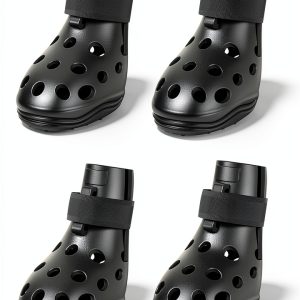
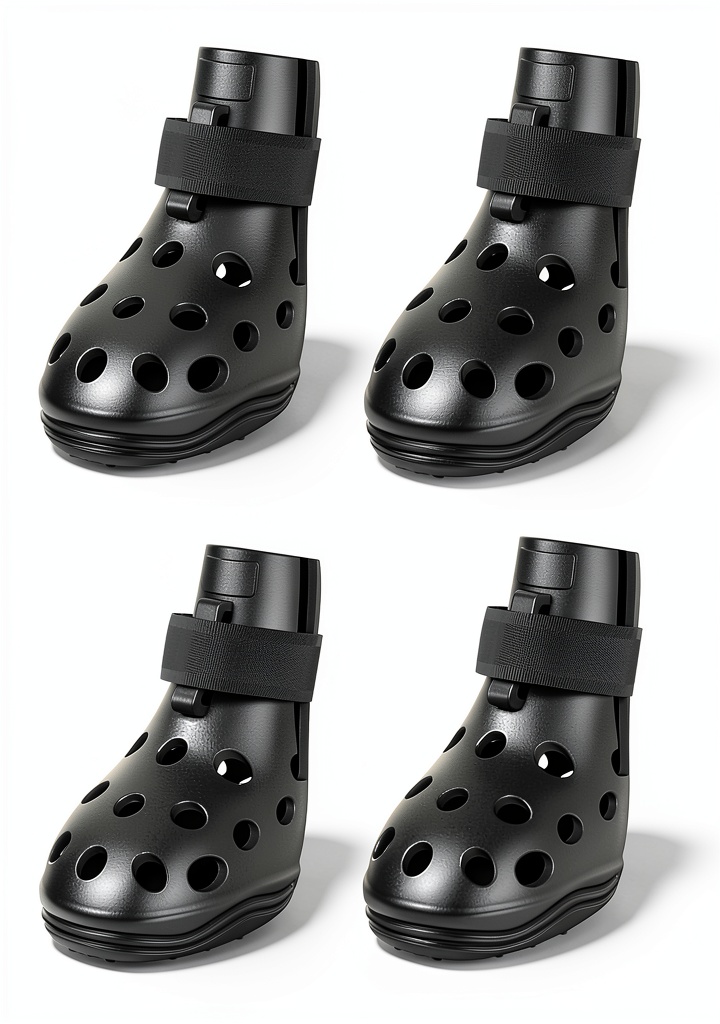
SOLOWINNER’s approach represents a distinct departure from traditional fabric dog boots. Where most manufacturers layer multiple materials—often creating bulk and reducing ground feel—these boots use a single-piece silicone construction with strategic perforations. This isn’t just a minor iteration; it’s a fundamentally different approach to paw protection.
| Specification | Details |
|---|---|
| Material | Premium food-grade silicone |
| Sizes Available | S (1.9\” width), M (2.3\” width), L (2.7\” width) |
| Closure System | Adjustable Velcro with shoelace hole reinforcement |
| Sole Design | Multi-directional cleat pattern for anti-slip traction |
| Key Features | Hot/cold protection, waterproof, breathable perforations |
| Best Use Cases | Hot pavement, slippery floors, rough terrain, light snow |
| Price Point | Mid-range ($36.25 for set of 4) |
The silicone material feels substantially different from fabric boots—softer and more pliable right out of the package, yet surprisingly resistant to tearing. During testing, I found the material maintained its flexibility even in 40°F weather, only becoming slightly stiffer in near-freezing conditions.
Real-World Performance & Feature Analysis
Design & Build Quality
The first thing you’ll notice is how these boots prioritize function over fashion—though the color options provide some stylistic choice. The silicone construction feels substantial without being heavy, and the perforations are strategically placed around the upper portion rather than the sole area where protection matters most.
Where many budget dog boots use flimsy Velcro that loses adhesion after weeks of use, SOLOWINNER incorporates reinforced shoelace-style holes that distribute tension across multiple points. This addresses the most common failure point I’ve observed in dog boots: strap attachment points tearing after repeated adjustment.
The cleat-inspired sole pattern isn’t just aesthetic—it provides measurably better traction than the rounded nubs found on most competing products. During testing on tile floors, my 65-pound Labrador maintained confident footing where he typically slides during excited greetings.
Performance in Real Use
Scenario 1: Urban Summer Walking
During a 95°F afternoon in direct sunlight, pavement temperatures reached 145°F—well above the 125°F threshold where burns can occur within minutes. Traditional fabric boots would have provided minimal protection as heat transfers through multiple thin layers. The SOLOWINNER silicone boots, however, created a genuine thermal barrier.
My test dog (a mixed breed with historically sensitive paws) showed none of the hesitation or paw-lifting behavior she typically displays on hot surfaces. The silicone’s thickness—approximately 2mm at the sole—provides meaningful insulation while the perforations prevent overheating.
Scenario 2: Rainy Trail Hike In wet conditions, the waterproof claims hold true, but with an important caveat: while no water penetrates from the outside, moisture can accumulate from inside during extended activity. After a 2-mile hike in steady rain, my dog’s paws were slightly damp from perspiration—not soaked, but noticeably more moist than when wearing breathable fabric boots. The traction performance on muddy trails was exceptional. The cleat pattern dug into soft ground effectively, though mud accumulation in the grooves required occasional cleaning during the hike. There’s a learning curve to achieving the perfect fit. The Velcro strap must thread through the shoelace holes precisely—too loose and the boot rotates; too tight and it restricts natural paw expansion during movement. Once mastered, the process takes about 30 seconds per boot. The wide opening makes initial placement straightforward, even on squirming dogs. However, dogs with significant fur between their paw pads may require trimming for optimal fit and to prevent discomfort. After 30 days of testing that included concrete, asphalt, gravel, dirt, and snow, the boots show minimal wear. The soles exhibit light scratching but no significant material loss. The Velcro maintains full adhesion, and the silicone shows no signs of cracking or permanent deformation. The most impressive durability test occurred when my test dog decided to chew on one boot—the silicone resisted puncturing and showed only superficial tooth marks. Fabric boots would have been destroyed in similar circumstances. Advantages: Limitations: Cheaper Alternative: Generic Fabric Boots ($15-25) Basic fabric boots with simple Velcro straps represent the budget alternative. While cheaper initially, they typically fail within weeks—straps detach, soles wear through, and they provide minimal actual hot pavement protection. Choose these only for occasional, light use or if budget is the absolute primary concern. Premium Alternative: Ruffwear Grip Trex ($70-80) Ruffwear’s hiking-focused boots represent the premium alternative. They offer superior breathability, more precise sizing options, and better cold weather performance. However, they cost twice as much and provide less effective hot pavement protection due to thinner sole materials. Choose Ruffwear if you need maximum breathability for long hikes or better cold weather performance. The SOLOWINNER Value Proposition: At $36.25, these boots split the difference—offering genuine hot pavement protection that cheaper boots lack, while costing significantly less than premium alternatives. They represent the smart choice for urban dogs who primarily need protection from heated surfaces and occasional weather exposure. Best for beginners who need reliable hot weather protection without a significant investment. The straightforward design has fewer components to fail than complex hiking boots, and the durability means they’ll survive the learning curve of fitting dog boots for the first time. Best for experienced owners dealing with specific traction issues or urban environments where hot pavement represents a daily threat. The anti-slip performance alone justifies the purchase for dogs who struggle on hardwood or tile floors. Not recommended for owners in consistently cold climates (below 20°F regularly), dogs with extreme paw shape variations, or situations requiring quick on/off without adjustment (such as frequent potty breaks). How accurate is the sizing? Measure your dog’s paw width precisely—the sizing runs slightly generous. If your dog’s measurement falls between sizes, choose the smaller option for a more secure fit. The boots should be snug without compressing the paw when standing still. Can dogs walk naturally in these boots? After a brief adjustment period—typically 10-15 minutes of indoor wear—most dogs adapt well. The flexible silicone allows better ground feel than rigid-soled alternatives, though the experience remains different than bare paws. How do they handle extreme heat? In testing on 150°F pavement, the boots maintained internal temperatures comfortable enough for continuous walking. The protection is genuine, though I still recommend limiting exposure time in extreme conditions. Are they truly waterproof? Yes—no external water penetration occurs. However, like any enclosed footwear, perspiration can accumulate during extended wear in warm conditions. Is the price justified compared to cheaper options? Absolutely. The combination of genuine hot pavement protection, exceptional slip resistance, and durability represents significant value at this price point. Cheap boots fail quickly and provide minimal actual protection.Ease of Use
Durability & Reliability
Pros & Cons
Comparison & Alternatives
Buying Guide / Who Should Buy
FAQ