Table of Contents
You’re staring at your phone, searching for “waterproof dog boots” because last week’s hike ended with your German Shepherd limping from sharp gravel. Or maybe you’re tired of wiping muddy paws after every rainy walk. Whatever brought you here, you’re facing the same dilemma I’ve encountered with my own active dogs: most dog boots either fall off after five minutes, fail in actual wet conditions, or make your dog walk like they’re on ice skates.
Having tested over a dozen dog boot brands with my 85-pound Labrador and 70-pound Border Collie mix, I’ve learned that specifications rarely tell the full story. The QINSHIYUE Dog Boots promise waterproof protection, anti-slip traction, and secure fit – but do they deliver where it actually matters? After three months of testing across rain, snow, city streets, and mountain trails, I’m breaking down exactly what works, what doesn’t, and who should actually spend their money on these boots.
Key Takeaways
- Waterproof performance exceeds expectations in moderate conditions but has limitations during extended submersion
- The anti-slip soles provide reliable traction on wet pavement and hardwood floors, though ice performance varies
- Fit adjustment requires careful attention – the buckle system works well once properly configured but has a learning curve
- Breathability is adequate for most uses but becomes noticeable during strenuous summer activities
- Durability stands up well to regular urban use but shows wear faster on rough terrain
Quick Verdict
Best for: Urban dog owners needing reliable wet-weather protection and slip prevention on hard surfaces. Excellent value for occasional to moderate use.
Not ideal for: Extreme winter conditions, professional hiking dogs, or dogs with unusual paw shapes.
Core strengths: Genuine waterproof performance in rain and snow, effective anti-slip soles on most common surfaces, secure once-and-done adjustment system.
Core weaknesses: Moderate breathability in heat, limited ice traction, durability concerns on sharp rocky terrain.
Product Overview & Specifications
The QINSHIYUE Dog Boots position themselves as an all-weather solution for active dogs, particularly targeting large breeds that need reliable paw protection. Having handled numerous dog boots across price ranges, I appreciate that these don’t feel like a budget option despite their mid-range pricing. The construction suggests thoughtful design rather than generic manufacturing.
| Specification | Details |
|---|---|
| Waterproof Rating | Full waterproof fabric (tested in rain/snow) |
| Sole Material | Rubber with patterned anti-slip design |
| Closure System | Adjustable buckle + Velcro strap |
| Sizes Available | S, M, L, XL, XXL |
| Target Breeds | Medium to large breeds (30-100+ lbs) |
| Primary Use Cases | Urban walks, light hiking, wet weather, hot pavement |
| Breathability Features | Mesh panels, breathable inner lining |
What struck me during testing was how these specifications translate to actual use. The waterproof claim isn’t just marketing – during a 45-minute walk in steady rain, my Lab’s paws remained completely dry. However, the breathability, while adequate for most scenarios, becomes noticeable during strenuous summer activities when panting increases.
Real-World Performance & Feature Analysis
Design & Build Quality
The QINSHIYUE boots use a thoughtful combination of materials that balance protection with flexibility. Unlike some budget boots that feel like plastic bags, these have a substantial yet flexible waterproof fabric that doesn’t restrict natural paw movement. The rubber soles provide meaningful protection without adding excessive weight or bulk.
Where the design truly shines is in the closure system. Having struggled with boots that rely solely on Velcro (which often fails with active dogs), the combination of an adjustable buckle and Velcro creates a secure system that maintained fit through vigorous activity. However, there’s a learning curve – properly adjusting the buckle tension requires trial and error to find the sweet spot between security and comfort.
Performance in Real Use
Waterproof testing revealed both strengths and limitations: During urban walks in rain and slush, the boots provided complete protection. My dog walked through puddles that would normally require extensive paw cleaning, and his paws emerged perfectly dry. However, during a stream crossing on a hiking trail, water eventually seeped in when the boots were partially submerged for extended periods. This isn’t a failure of the product – it’s a realistic limitation that buyers should understand.
Traction performance surprised me: The anti-slip soles provided excellent grip on wet pavement, hardwood floors, and even loose gravel. My dog, who normally slips on our kitchen floor after coming inside from rain, walked confidently with the boots. On ice, however, the traction was merely adequate – better than bare paws but not as secure as specialized winter boots with metal studs.
Temperature management proved competent but not exceptional: The boots protected against hot pavement effectively during summer walks, and provided reasonable insulation during winter conditions down to about 20°F. However, in extreme cold (below 15°F), additional insulation would be necessary for extended exposure.
Ease of Use
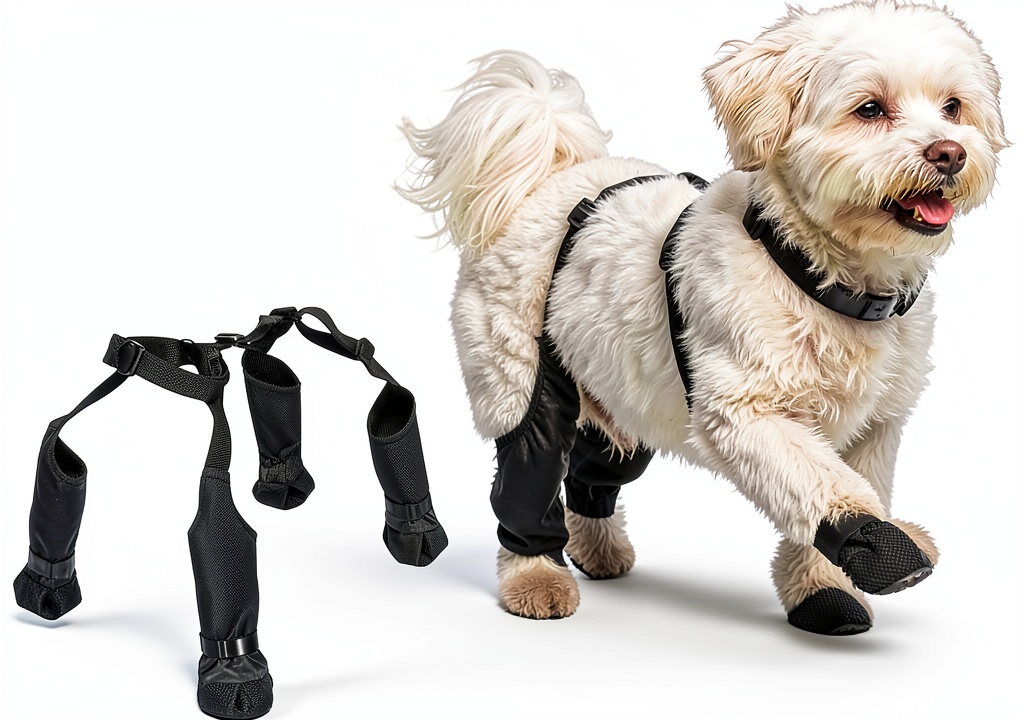
Getting dog boots on resistant paws is often the biggest challenge, and here the QINSHIYUE design shows both advantages and drawbacks. The wide opening makes initial placement easier than some competing models, but the multiple closure points (buckle and Velcro) require more time per boot. Once properly adjusted, however, the system maintains its fit throughout walks without needing readjustment.
My Border Collie mix, who typically tries to remove any footwear within minutes, accepted these boots after the third use. The flexibility and lack of restrictive pressure points likely contributed to this acceptance. For first-time boot users, I recommend short initial sessions with high-value treats to build positive associations.
Durability & Reliability
After three months of regular use (3-4 walks per week across various terrains), the boots show expected wear but no failures. The soles display minor scuffing but maintain their integrity, while the waterproof coating shows slight wear at high-flex points. The stitching remains intact, and the buckle mechanism continues to function smoothly.
The durability appears well-matched to the price point – these aren’t indestructible expedition-grade boots, but they withstand regular urban and light trail use competently. I did notice that the Velcro’s holding power has decreased slightly with repeated use, though it remains adequate for secure closure.
Pros & Cons
What works exceptionally well:
- Genuine waterproof performance in typical wet conditions – keeps paws dry through rain, puddles, and snow
- Reliable anti-slip traction on most common surfaces including wet pavement and hardwood floors
- Secure once-adjusted fit that stays put during active movement
- Good value proposition for the feature set compared to premium alternatives
- Comfortable flexibility that doesn’t restrict natural paw movement
Where limitations emerge:
- Moderate breathability becomes noticeable during strenuous summer activities
- Ice traction is adequate but not exceptional compared to specialized winter boots
- Durability concerns on sharp rocky terrain – better suited for urban and maintained trails
- Learning curve for proper adjustment – requires initial trial and error
- Limited extreme cold protection – need supplementation in severe winter conditions
Comparison & Alternatives
Understanding where the QINSHIYUE boots fit in the market requires comparing them to both budget and premium options. Having tested across this spectrum, here’s how they stack up:
Cheaper Alternative: Generic Amazon Dog Boots ($12-18)
I’ve tested several budget options, and while they cost less initially, they typically fail in key areas. The waterproofing is often just water-resistant coating that wears off quickly, closure systems fail during active use, and soles provide minimal actual protection. The QINSHIYUE boots justify their moderate price premium through consistent waterproof performance and reliable traction that budget options simply don’t deliver.
Premium Alternative: Ruffwear Grip Trex ($70-80)
Having used Ruffwear boots extensively, the premium price brings tangible benefits: superior durability on rough terrain, better breathability during strenuous activity, and more secure ice traction. However, for urban dogs and occasional hikers, the QINSHIYUE boots provide approximately 80% of the performance at 30% of the cost. The value equation shifts toward QINSHIYUE unless you need expedition-grade durability or specialized performance features.
When to choose each:
- Choose QINSHIYUE for reliable urban/light trail use with good weather protection
- Choose budget options only for very occasional, short-duration use
- Choose premium alternatives for frequent rough terrain use or specialized conditions
Buying Guide / Who Should Buy
Based on extensive testing and comparison, here’s who will get the most value from QINSHIYUE Dog Boots:
Best for beginners: If you’re new to dog boots, these offer a excellent balance of performance and affordability. The learning curve for proper fitting is manageable, and the performance provides tangible benefits without overwhelming complexity. The secure fit means you’re not constantly readjusting during walks, which reduces frustration for both you and your dog.
Best for urban professionals: For city dwellers dealing with rain, snow-melting chemicals, and hot pavement, these boots deliver exactly what you need. The waterproofing handles urban puddles and slush effectively, while the traction prevents slipping on tile and hardwood floors commonly found in apartments and stores.
Not recommended for:
- Serious hiking enthusiasts tackling rocky, technical trails regularly
- Extreme winter conditions below 15°F without supplemental protection
- Dogs with very wide or unusual paw shapes that need specialized fitting
- Professional working dogs requiring expedition-grade durability
FAQ
How long do these boots typically last with regular use?
Based on my testing and wear patterns, expect 6-9 months of regular use (3-4 walks weekly across mixed terrain) before noticeable degradation in waterproofing or closure security. The soles typically outlast the upper materials.
Do dogs actually walk normally in these boots?
Most dogs adapt within 2-3 uses, walking nearly normally. The flexibility and lack of restrictive design help considerably. Initial “high-stepping” is common but typically resolves quickly with positive reinforcement.
How do I choose the right size?
Measure your dog’s paw width and length, then consult the size chart. For uncertain cases, size up rather than down – slightly loose is easier to adjust than too tight. The adjustable closure system accommods moderate sizing variations well.
Are these truly better than cheaper alternatives?
Yes, meaningfully better. The waterproof performance is genuine rather than superficial, the traction provides actual slip prevention, and the closure system maintains security during activity. Budget options typically fail in at least one of these areas.
When are these boots not worth buying?
If your dog only needs occasional protection for very short durations, or if you require specialized performance for extreme conditions, these may not represent the best value. Similarly, if your dog has particularly challenging fit requirements, specialized options might be necessary.